"Arcane Archive"
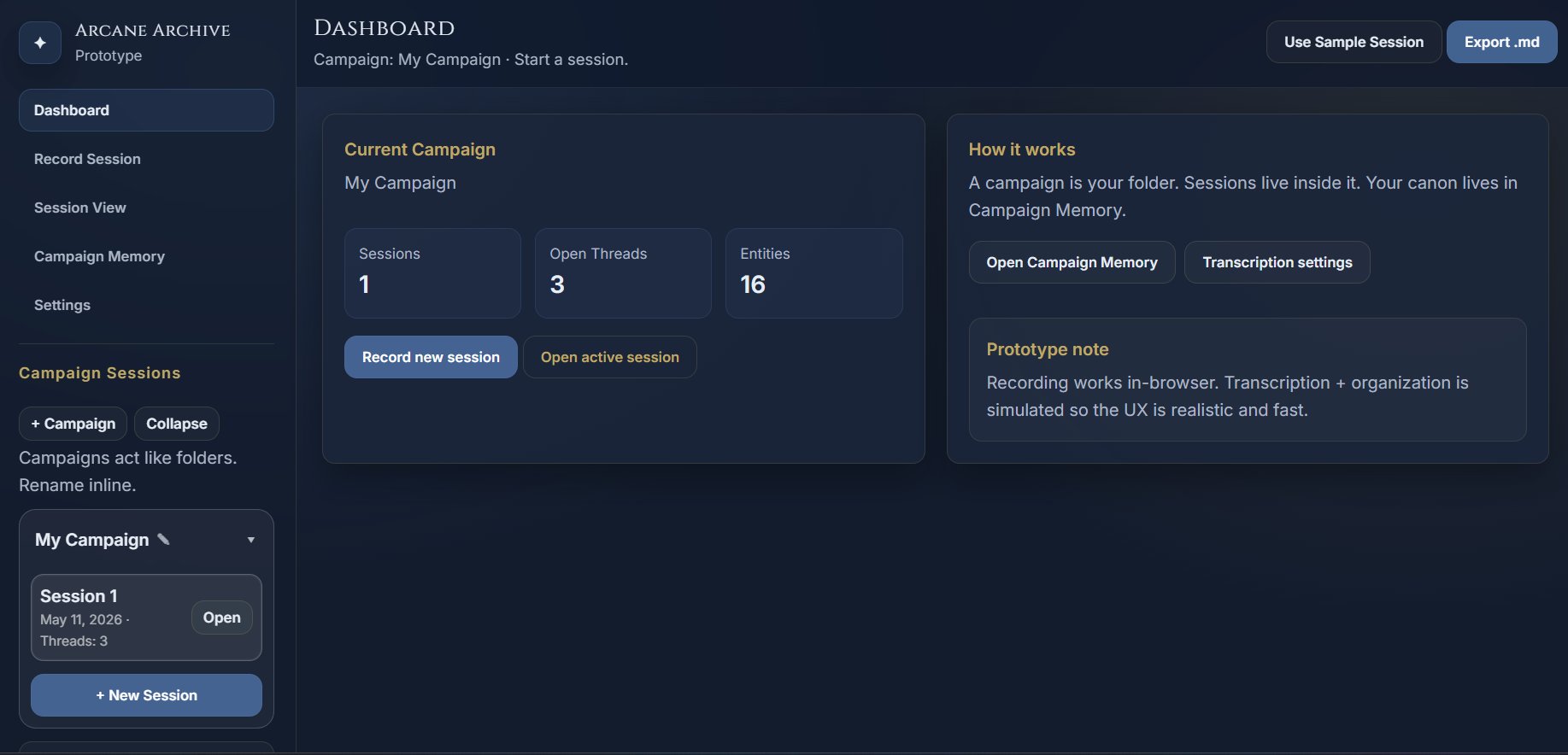
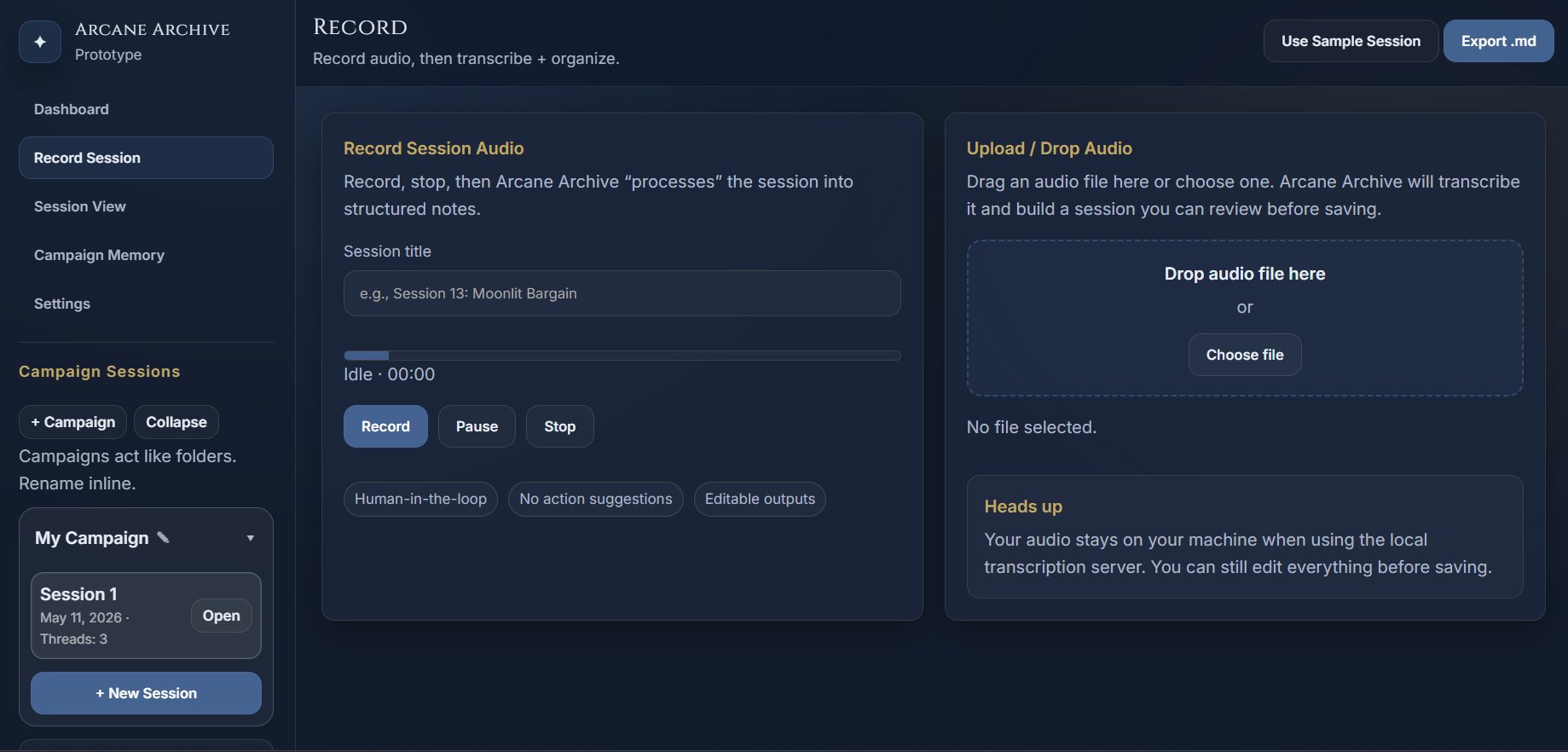
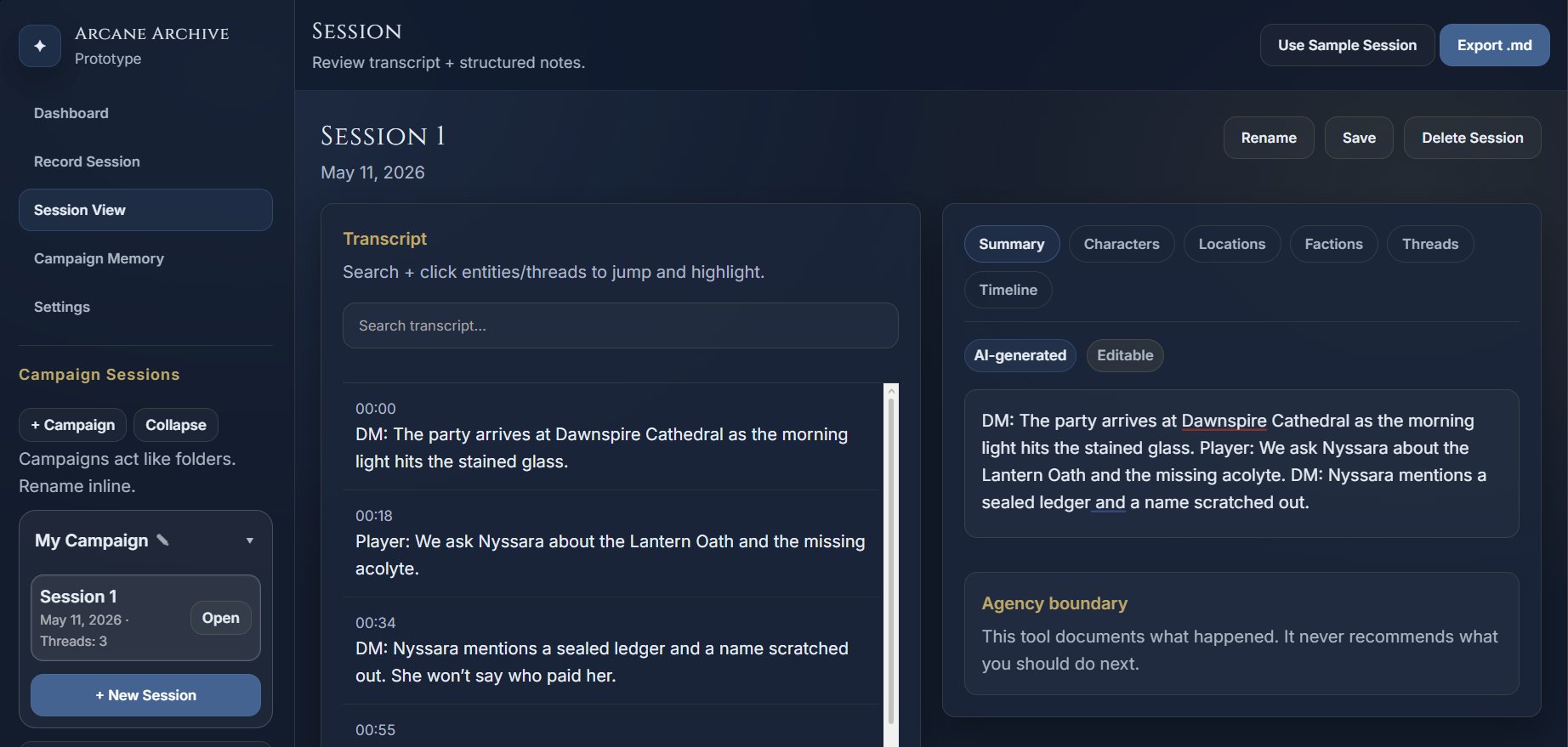
An AI-assistant designed specifically to assist in tabletop RPG gameplay, transcribing audio in real-time, pulling out important narrative elements, such as NPCs, locations, factions, and even storylines yet to be resolved, organizing everything into a comprehensive campaign wiki which is easily accessible by anyone at your table after the game. Completely unconcerned with any kind of spotlight or interfering with your gameplay in any way – designed from scratch to serve as a silent guardian who keeps track of things that matter. Every session leaves some kind of record behind. Every character introduced, every promise made, every clue dropped, and all of them meticulously recorded and ready to go. Just another member of your party – not very flashy, but consistently paying attention.
Project Links
Read the full research paper or dig into the open-source prototype.
The Problem
TTRPGs like D&D and Pathfinder generate massive amounts of narrative data across sessions that can run for months or even years — NPCs, locations, factions, plot threads, loose ends. Players have to keep track of all of it manually. Existing tools either require full manual entry (World Anvil, Obsidian), or are built for business meetings and don't care about narrative structure or player agency (Otter.ai, Fireflies).
The core research question: "What would be a useful design of a constrained AI-based narrative memory assistant in helping players with their recall and sensemaking in TTRPGs without reducing their agency?"
Pilot Study
Formative evaluation with a real TTRPG group — five participants, three hours, live session recorded and processed through the full pipeline.
All five participants found the campaign folder structure intuitive and were positive about the tool's ability to organize narrative memory. Two friction points surfaced: transcription latency on long audio, and speaker differentiation — the ASR pipeline couldn't reliably distinguish which player said what across five live voices.
HCAI Constraints First
Before any code, six hard constraints were locked in defining exactly what the AI was and wasn't allowed to do:
-
01
No action suggestions Never predicts plot outcomes, suggests player actions, or invents narrative elements
-
02
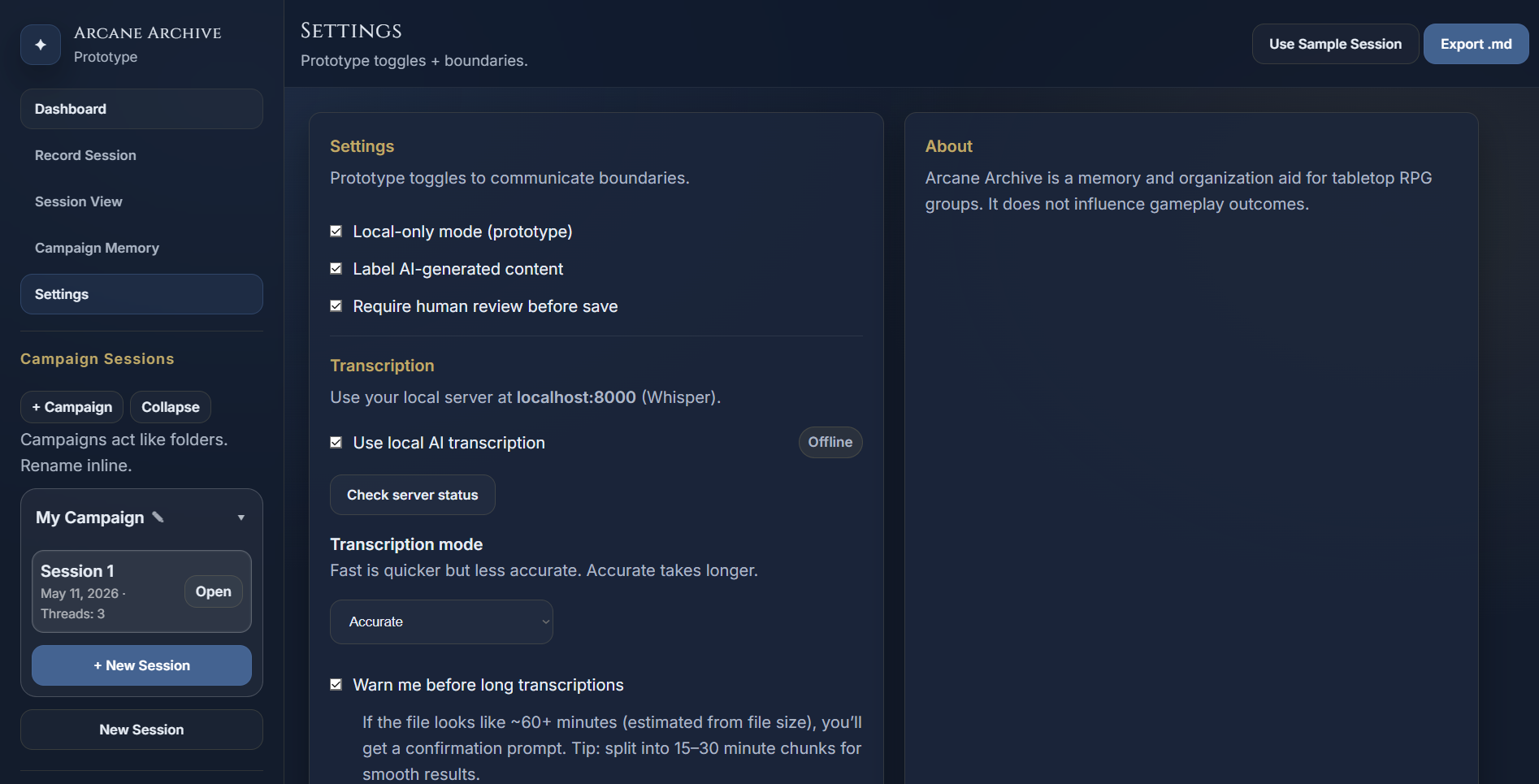
Labeled AI outputs Every AI-generated summary, entity, or thread is explicitly badged "AI-generated" + "Editable" in the UI
-
03
Human review required Nothing gets saved to the campaign log without explicit user approval — review gate on every session
-
04
Per-entity permissions Accept or reject individual extracted entities — no forced all-or-nothing batch approvals
-
05
Modifiable output All AI content displayed in editable form so users can correct errors before saving
-
06
On-device processing Audio processed locally via faster-whisper by default — session content never leaves the machine
Outcome & Takeaways
The prototype shipped as a fully operational web app — no login, no cloud dependency, no third-party data sharing in local mode. The pilot confirmed that constraint-first HCAI design is viable in creative collaboration: starting with a minimal, locked-down role definition ("only memory and organization") and building capability inside those constraints automated genuinely tedious work without any of the failure modes that would've broken the experience.
"An AI that understands the limits of its power is no less powerful than one that doesn't. The former simply knows its place."